2026-11-24
Facelift Scars: Should the Incision Follow the Hairline or Hide Inside the Scalp?
Dr. Heo Jae-won compares two facelift incision options, along the hairline or hidden inside the scalp, covering scar visibility, temple shape, sideburns, and downtime.
 Dr. Cho Hyun-woo of Ipche Plastic Surgery: An Honest, Straightforward Facial Contouring Story
·
View Korean original
Hello.
I am Dr. Heo Jae-won, a board-certified plastic surgeon practicing youthful-look surgery at Dimensional Plastic Surgery.
During facelift consultations, I often get asked a question more frequently than you might expect.
"Doctor, is it better to make the incision along the hairline, or to hide it inside the hair?"
Today, I'll briefly explain the differences between these two approaches.
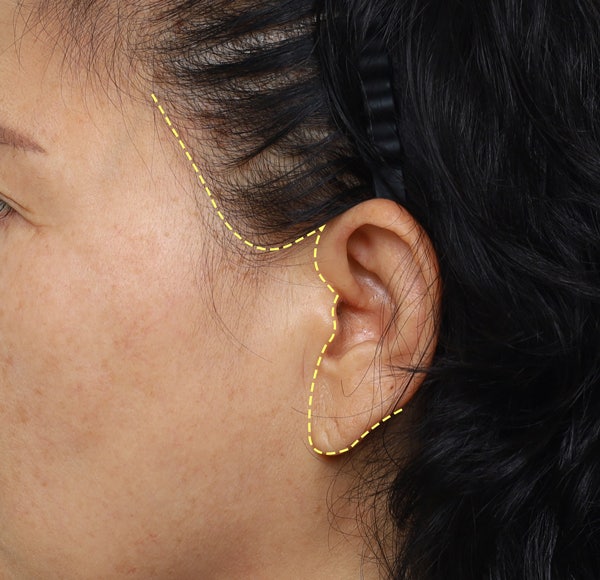
Incision along the hairline (Pretrichial incision)
The first is making the incision along the hairline, the boundary where the hair begins.
The biggest advantage of this method is that it makes it easier to preserve the position of the hairline.
A facelift involves dissecting the skin and SMAS, then pulling them up and back and fixing them in place.
If the incision is placed inside the scalp, the temporal hairline may be pushed backward depending on the direction in which the skin is pulled.
In contrast, an incision along the hairline allows the skin to be repositioned while minimizing movement of the hairline itself.
This can be a particularly good choice for patients who have a wide forehead or whose temporal hairline is especially important to their appearance.
That said, there are also drawbacks.
Because the incision sits against hairless skin, the scar area firms up and the surrounding skin may pucker slightly around the 6–8 week mark. This is a normal part of healing, so downtime is slightly longer.
Also, everyone's sideburn hairline is different, so the incision must be custom-designed to be hidden beneath the hair based on the direction in which the hair grows. This also requires the surgeon's experience.
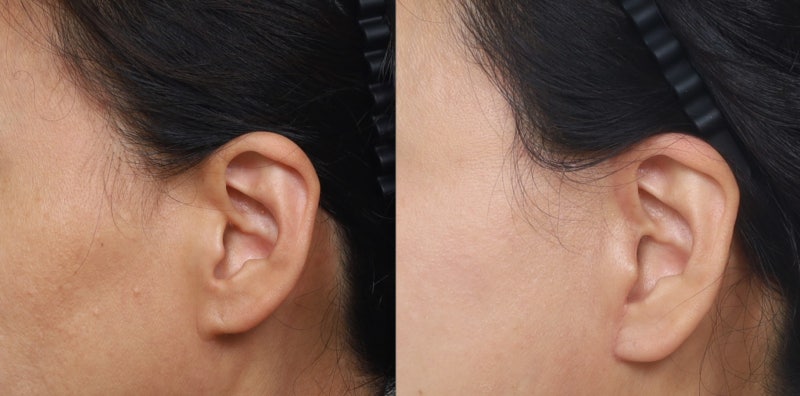
Here is an example of an incision made outside the hairline.
As you can see in the photos, this patient originally had fairly short sideburns. In cases like this, if the incision were made inside the scalp, the sideburns could be pulled far upward, which may make the face look wider or make the sideburn area look unnatural.
For this reason, we fully considered the patient's hair growth direction and sideburn shape, and made the incision on the outer side of the hairline.
Once enough time has passed, the incision area becomes naturally camouflaged by the surrounding hair follicles, so you can see that the incision on the outer side of the hairline is far less noticeable than you might expect.
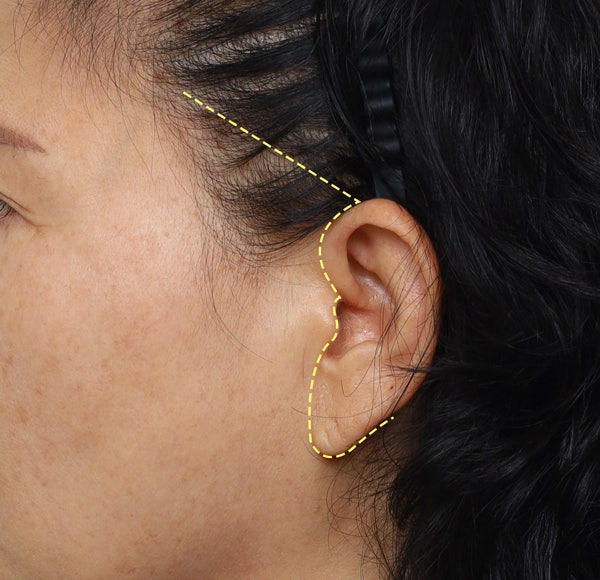
Incision inside the scalp (Trichial incision)
The second approach places the incision further inside the hairline, within the scalp at the temple.
Its biggest advantage is that the scar can be hidden by hair.
If there is enough hair, the incision may be barely visible from the outside after surgery.
However, there are also points to consider here.
When the skin is pulled up and back, the temporal hairline may also shift backward.
If a patient has a wide forehead or a high hairline, the temple area may look even wider after surgery.
But because the incision is not placed on the hairline border, the scar is better concealed right after surgery and the result looks more natural.
If a large amount of skin removal is expected, the sideburns may be pushed too far back, so a hairline incision is the better choice in that case.
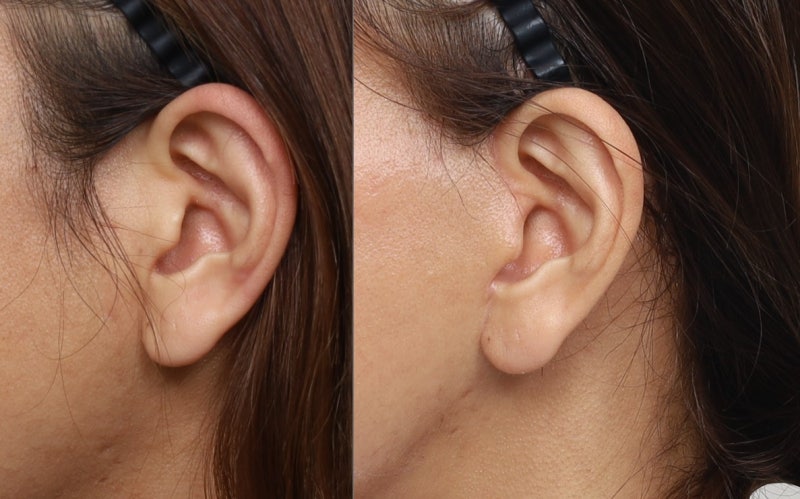
Here is an example of an incision made inside the scalp.
As you can see in the photos, this patient has moderately long sideburns. In cases like this, an incision inside the scalp is hidden by hair right after surgery, which eases concerns about scarring. Over time, the surrounding hair naturally covers it, making it even less noticeable.
However, when the incision is made inside the scalp, the sideburns can shift upward. That is why it's important to plan the incision carefully, taking into account the existing sideburn length and position, the amount of skin to be removed, and other factors.
So which method is better?
There is no single right answer.
If your hairline is low and you don't have enough hair at the temples, a hairline incision may be more suitable.
Conversely, if your hairline is stable, you have plenty of hair, and hiding the scar is a priority, an incision inside the scalp can be a good choice.
What I consider important in facelift surgery is not simply where to hide the scar.
We also need to consider how naturally the hairline is preserved after surgery, whether the sideburn position looks natural, and how well the incision scar heals.
A facelift is a procedure that lifts sagging skin, but it is also a procedure that preserves the natural borders and shape of the face.
The incision is where the surgery begins, but it is also an important factor that affects the overall quality of the final result.
Therefore, rather than treating one method as the correct answer, it's important to design the incision based on each patient's hairline, scalp condition, and facial shape.
Before surgery, I thoroughly assess these factors, and I believe it is important to achieve natural results not only for the face but also for the hairline.
I hope this article is helpful to anyone considering facelift surgery.
Thank you.
Frequently Asked Questions
Is a hairline incision better for facelift scars?
There is no single right answer. If your hairline is low and you don't have enough hair at the temples, a hairline incision may be more suitable. If your hairline is stable and you have plenty of hair, an incision inside the scalp can be a good option.
Are scars less visible if the incision is inside the scalp?
Yes. If you have enough hair, the incision can be concealed right after surgery and may be hard to see from the outside. However, the temporal hairline may shift backward, so patients with a wide forehead or high hairline may find their temples look wider after surgery.
Is downtime longer with a hairline incision?
Yes, downtime is slightly longer with a hairline incision. Because the incision sits against hairless skin, the scar area firms up and the surrounding skin may pucker slightly around 6–8 weeks. This is a normal part of the healing process.
Which incision is better if the sideburns are short?
If your sideburns are fairly short, an incision on the outer side of the hairline may be considered rather than one inside the scalp. An incision inside the scalp can pull the sideburns upward, which may make the face look wider or make the sideburn area look unnatural.
What are the drawbacks of an incision inside the scalp?
The main drawbacks are that the sideburns may shift upward or the temporal hairline may be pushed backward. If a large amount of skin removal is expected, the sideburns may be pushed too far back, in which case a hairline incision may be the better option.
Clinic Info
Details
- 서울 강남구 언주로 874 쌍봉빌딩 5층
- 02-516-0600
- Mon-Thu 10:00-19:00Fri 10:00-21:00Sat 10:00-16:00
- Director 조현우
- ipcheps.com
- Official channels · instagram.com · youtube.com · pf.kakao.com · blog.naver.com