2026-11-26
Cortical Osteotomy for a Slimmer Frontal Profile: Are There Cases Where Surgery Is Difficult?
Dr. Cho Hyun-woo explains how cortical osteotomy can enhance the frontal slimming effect of square jaw surgery, and why nerve canal position and a pre-surgery CT matter.
 Dr. Cho Hyun-woo of Ipche Plastic Surgery: An Honest, Straightforward Facial Contouring Story
·
View Korean original
Hello, this is Dr. Cho Hyun-woo at 3D Plastic Surgery.
Compared with 10 to 15 years ago, it seems that not many people today have a square jaw angle that has developed to nearly 90 degrees.
Instead, more and more people these days want their face to look slimmer from the front.
However, unless there is a jaw angle that is actually worth cutting or the jawbone flares out widely to the sides, resecting the square jaw bone alone may not bring a significant change in the frontal view.
In such cases, I have explained that performing cortical osteotomy together with masseter muscle resection can help enhance the slimming effect from the front.
So, is cortical osteotomy a procedure that anyone can undergo?
In the nearly 20 years I have been performing cortical osteotomy, I have often encountered cases where the nerve lies very close to the bone and requires considerable caution during surgery.
Based on this experience, I now follow one clear criterion that I always check when performing cortical osteotomy.
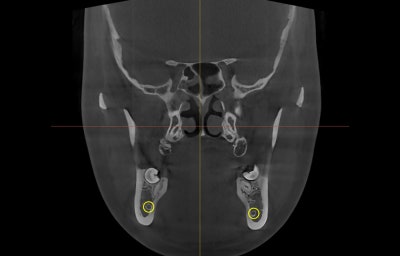
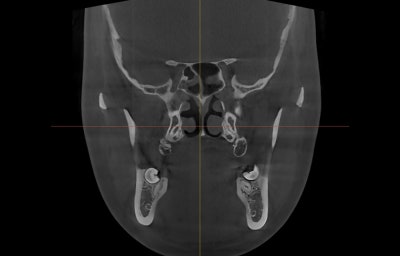
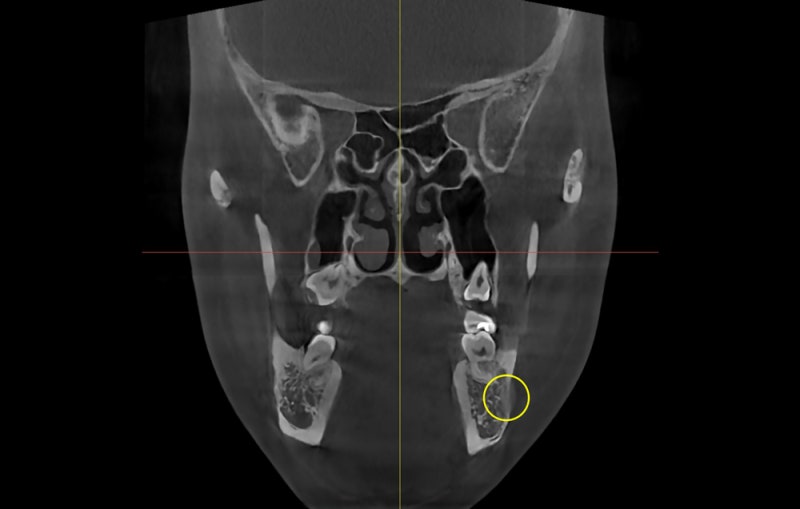
This is the coronal view of the CT that I showed earlier when explaining how to read a CT scan.
In the coronal view, you can check the location of the nerve canal.
The area marked with a yellow circle is the nerve canal. By scrolling through the CT images from front to back, you can trace its position.
By tracing the position of the nerve canal in this way, I perform cortical osteotomy only up to the point before the nerve canal drifts more than half of the bone toward the outside.
In reality, even when a cortical osteotomy is performed, the cortical bone does not separate and come off cleanly on its own.
In fact, part of the outer cancellous bone is removed along with the cortical bone.
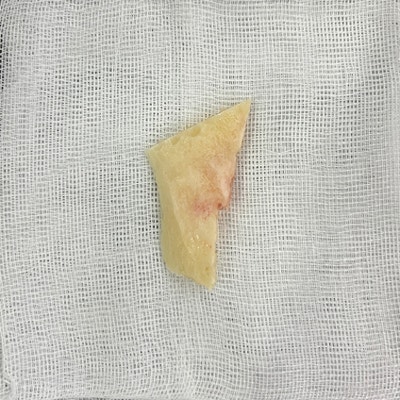
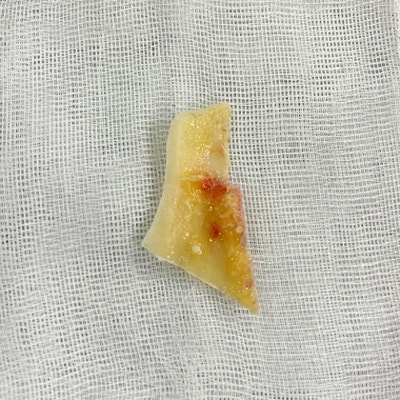
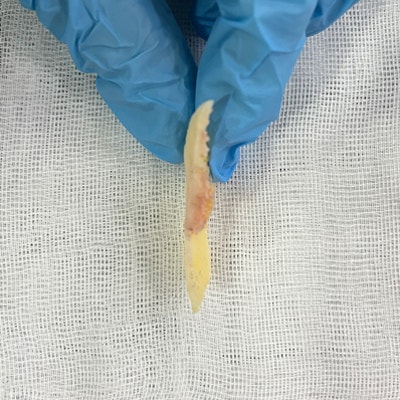
When the nerve canal runs close to the outer bone, it may become exposed during the cortical osteotomy.
Of course, the nerve remains attached to the remaining bone. However, if the nerve canal is exposed, there is a possibility of tingling sensations or discomfort after surgery.
Therefore, when the nerve canal is located on the outer side, I do not force a cortical osteotomy. Instead, I perform cortical shaving.
Cortical shaving can also remove a sufficient amount of bone. Depending on the patient's bone structure and the position of the nerve canal, it can produce a bone-reduction effect comparable to that of cortical osteotomy.
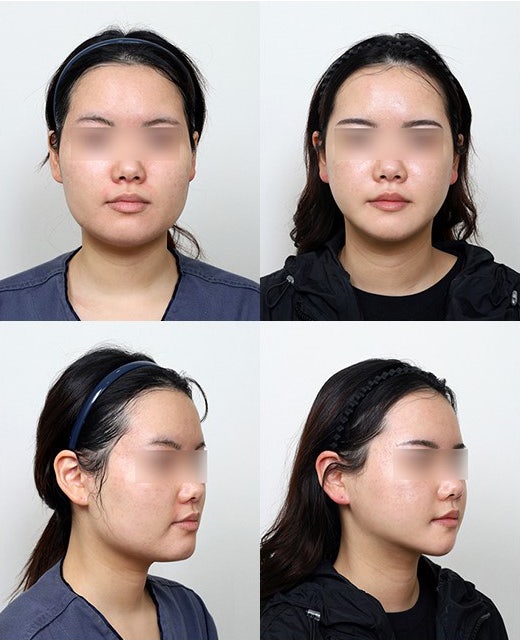
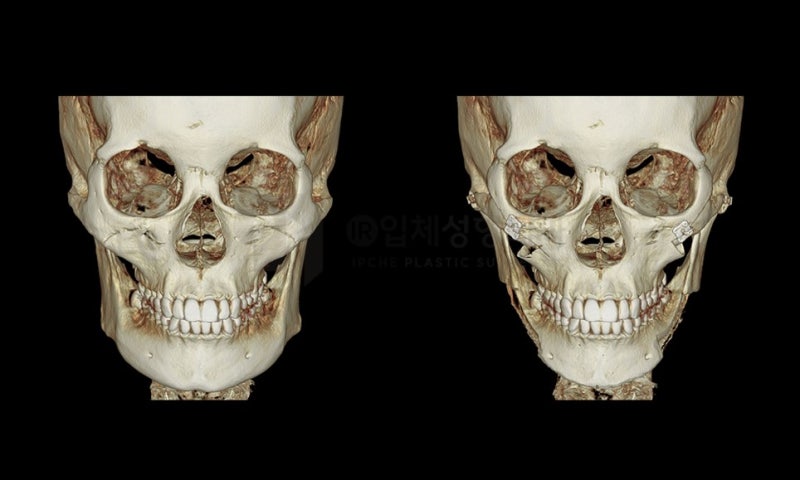
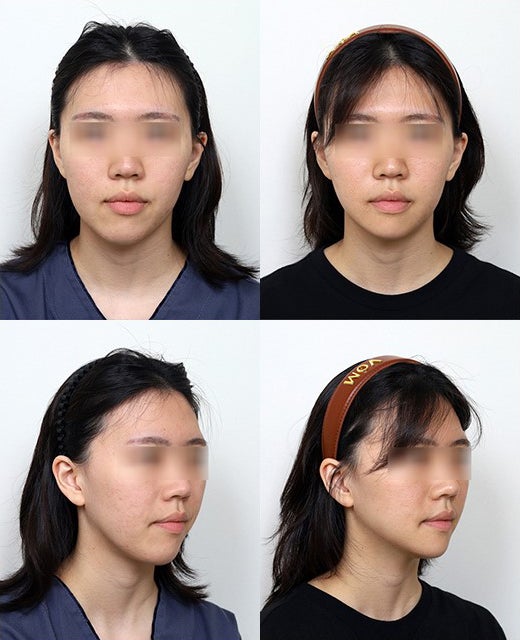
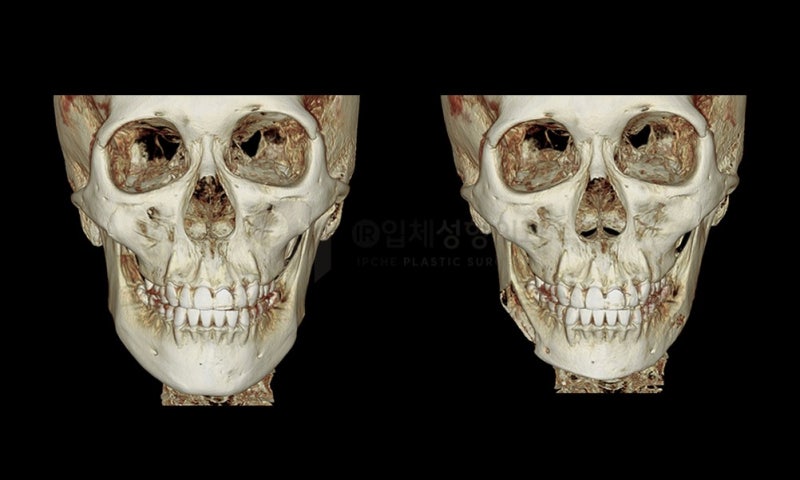
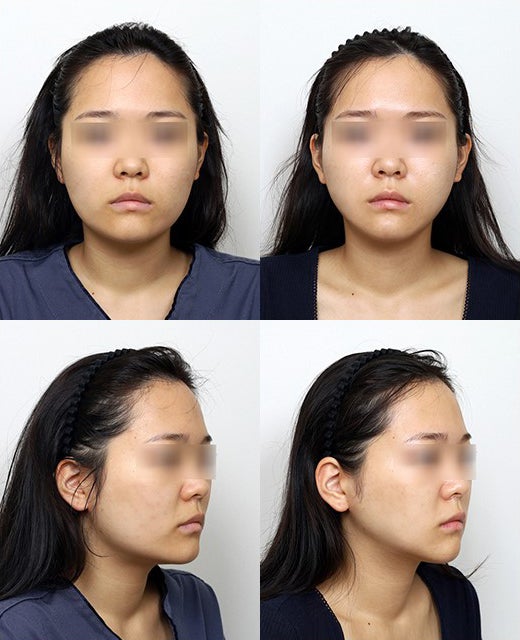
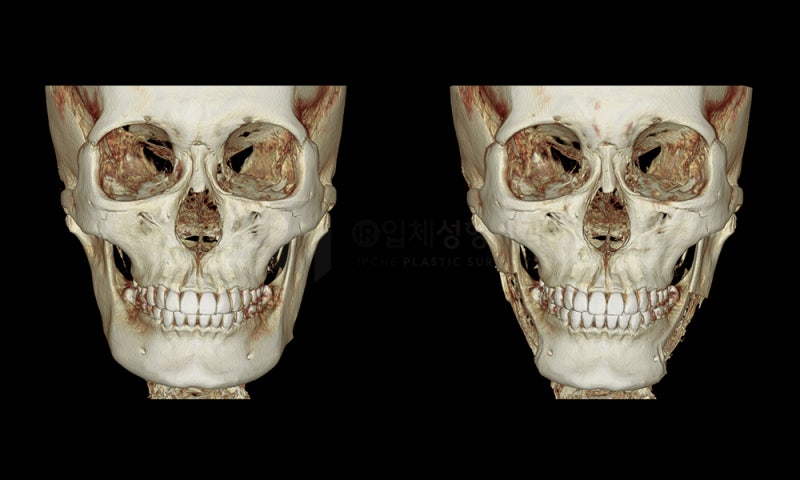
As these photos show, for patients whose left side protrudes considerably, the cortex becomes almost invisible once more cortical shaving is performed.
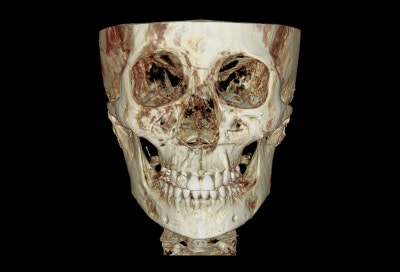
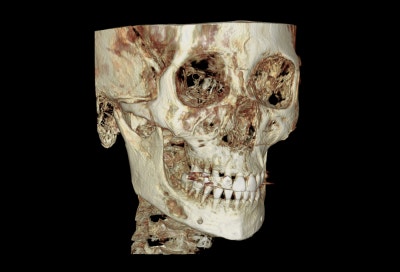
Looking at the post-surgery CT images, the bone appears to have holes.
In reality, cancellous bone remains in those areas, so the bone gradually fills in over time and naturally covers them.
In this way, cortical shaving can deliver a sufficient reduction effect while helping to lower the risk of nerve damage.
Therefore, when the nerve canal is in a risky position, I recommend cortical shaving rather than forcing a cortical osteotomy.
When the square jaw is pronounced from the front, many patients feel a dramatic effect when cortical osteotomy and masseter muscle resection are performed together.
But more important than a dramatic surgical result is, above all, safety.
If the nerve canal is exposed or the nerve is damaged during the osteotomy, it can lead to long-term side effects such as reduced sensation or numbness. In some cases, recovery is difficult.
So if you are considering cortical osteotomy, it is important to confirm the position and course of your nerve canal accurately with a pre-surgery CT. Based on that, you should thoroughly discuss the extent to which cortical osteotomy is feasible and the most suitable surgical approach for you.
Rather than undergoing surgery unconditionally, I hope you will put safety first and choose the method that suits you best.
Thank you.
Frequently Asked Questions
Is shaving the square jaw bone alone enough for a good frontal effect?
It may not be sufficient in every case. The doctor explains that unless there is a jaw angle worth cutting or the jawbone flares out widely, resecting the bone alone may not produce a major change from the front. In such cases, performing cortical osteotomy together with masseter muscle resection may help enhance the slimming effect from the front.
Can anyone undergo cortical osteotomy?
The doctor explains that it is not a procedure anyone can have. Because the nerve often lies very close to the bone and requires considerable caution, whether to proceed is decided after confirming the position of the nerve canal.
What happens if the nerve canal is located on the outer side?
In this case, the doctor explains, cortical osteotomy is not forced. Instead, cortical shaving is performed. Because cortical shaving can also remove a sufficient amount of bone, a bone-reduction effect comparable to cortical osteotomy can be expected, depending on the bone structure and the position of the nerve canal.
Is it a problem if the nerve is exposed during cortical osteotomy?
Yes. The doctor explains that if the nerve canal is exposed, there is a possibility of tingling or discomfort after surgery. If the nerve is damaged, it can lead to long-term side effects such as reduced sensation or numbness, and in some cases recovery may be difficult.
Why do holes appear in the bone on the post-surgery CT?
The doctor explains that the bone appears to have holes after cortical shaving because cancellous bone remains in those areas. As a result, the bone gradually fills in over time and naturally covers the area.
What should be checked before surgery?
The doctor stresses the importance of accurately confirming the position and course of your nerve canal with a pre-surgery CT. Based on this, the doctor recommends thoroughly consulting about the extent to which cortical osteotomy is feasible and the most suitable surgical approach.
Clinic Info
Details
- 서울 강남구 언주로 874 쌍봉빌딩 5층
- 02-516-0600
- Mon-Thu 10:00-19:00Fri 10:00-21:00Sat 10:00-16:00
- Director 조현우
- ipcheps.com
- Official channels · instagram.com · youtube.com · pf.kakao.com · blog.naver.com